


Technical SEO services Dubai can become important when a website contains valuable pages that do not appear in Google search results. A page may be live, well-written and relevant to customers, yet remain unavailable to people searching for its subject. For businesses that rely on organic discovery, this can create a gap between the content they publish and the information potential customers can find.
The issue can be easy to miss because an unindexed page may still open normally when its URL is entered directly. From a website owner’s perspective, everything may appear to be working as expected. However, the same page may be missing from an important route through which new customers discover the business.
What Does It Mean When an Important Page Is Not Indexed?
Page indexing is the process through which a search engine stores information about a webpage and makes it eligible for consideration in search results. Publishing a URL does not automatically guarantee that the page will appear when someone searches for its subject. Search engines assess individual pages before deciding whether they should be included in their index.
The business importance of an unindexed page depends on its purpose. A temporary utility page may have little search value, while a page describing a major service could represent a meaningful missed opportunity. Identifying that difference should be the first step before deciding whether further action is necessary.
Which pages deserve closer attention?
Businesses can prioritise pages that have a clear role in attracting or assisting potential customers:
- Core service pages covering important offerings.
- Product and category pages with genuine search demand.
- Location pages serving distinct customer requirements.
- Helpful resources supporting commercial topics.
- Newly published pages created to attract organic visitors.
What Happens to Business Opportunity?
Technical SEO services Dubai can help businesses assess what an unavailable page means from a commercial perspective. When a key service page cannot appear for a relevant search, potential customers may encounter other businesses instead. The organisation has created the content, but the page may not be reaching the audience it was intended to serve.
There can also be an effect on the relationship between different types of content. For instance, an informative article may attract someone researching a particular need, while the related service page remains unavailable through search. This can limit the number of organic routes leading visitors from useful information towards a relevant business offering.
What can be affected?
- Organic discovery of important services.
- Search exposure for specific commercial subjects.
- Traffic reaching priority landing pages.
- Connections between informational and commercial content.
- Potential enquiries generated through organic search.
How Does Google Crawling Relate to an Unindexed Page?
Google crawling describes how Google’s systems discover and access webpages. A newly published URL needs to be discoverable and accessible before Google can evaluate it. Pages that have few connections to the rest of a website may therefore require closer attention during an investigation.
Crawling and indexing are separate stages, however. A page can be discovered and accessed without being included in search results, so finding evidence that Google has reached a URL does not automatically explain why the page is absent from the index.
What should businesses investigate?
A focused review can examine:
- Whether the URL is connected to relevant areas of the website.
- Whether important sections can be reached without unnecessary navigation steps.
- Whether the page responds correctly when accessed.
- Whether comparable pages are being discovered normally.
- Whether the situation affects one URL or a wider group.
Why Can Two Similar Pages Have Different Indexing Outcomes?
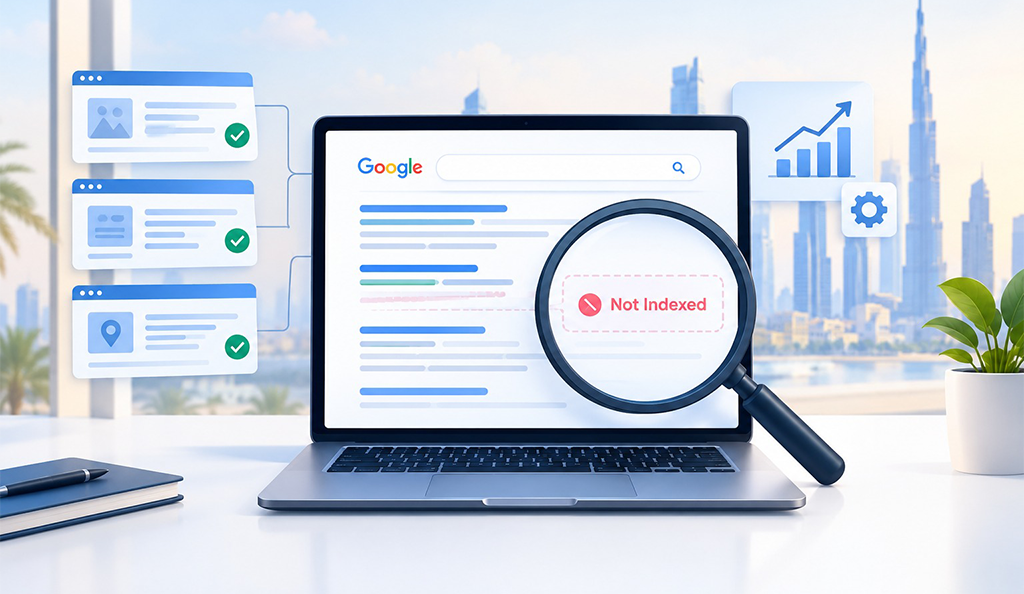
Technical SEO analysis can help businesses compare an affected page with another URL that is already appearing in search. Two pages may cover similar subjects but have different internal relationships, structures or technical configurations. These differences can provide useful clues without requiring changes to every page on the website.
This approach is particularly useful for websites containing many similar pages. If most service pages are available but a small group is missing, the differences between those groups may be more informative than the missing pages alone. The investigation can then concentrate on a specific pattern instead of treating the entire website as one problem.
What can a comparison reveal?
- Page type: Are service pages affected while articles remain available?
- Website position: Are deeper sections affected more frequently?
- Publication timing: Are recently added URLs showing the same pattern?
- Page relationships: Do affected pages have fewer relevant internal connections?
- Configuration: Do the affected URLs share a particular setup?
A comparison like this can help narrow the investigation before corrective work begins.
Why Does the Length of the Problem Matter?
The SEO company in Dubai professionals may consider both the duration and scale of an indexing problem. A newly published page may require some time to be processed, whereas a commercially important URL that remains unavailable for an extended period deserves closer attention. The length of time provides useful context when deciding how urgently the business should investigate.
The number of affected pages matters as well. One missing URL may have a limited impact, while several pages from the same service category could indicate a broader issue. Looking at both factors helps businesses distinguish an isolated occurrence from a pattern requiring a more structured response.
Which situations deserve faster investigation?
- A major service page has never appeared in search.
- Several related pages are absent at the same time.
- Previously visible pages become unavailable.
- Newly published pages repeatedly experience the same issue.
- A website redesign is followed by changes in search coverage.
Can Mobile SEO Reveal Additional Problems With Important Pages?
Mobile SEO deserves attention when an important page is expected to serve customers who primarily browse on smartphones. A page may be technically available while its mobile presentation makes important information difficult to access. Navigation, content placement and interactive elements can all influence how effectively visitors use the page.
This is not the same as saying that mobile issues automatically cause indexing problems. Instead, the mobile experience should be reviewed separately so that an important page is useful to visitors once they reach it. This is especially relevant for businesses whose customers frequently research services from mobile devices.
What should businesses review?
- Whether the main information is easy to read.
- Whether navigation works properly on smaller screens.
- Whether buttons and forms are convenient to use.
- Whether important page elements display correctly.
- Whether the mobile version presents the intended content.
Can Schema Markup Fix a Page That Is Not Indexed?
Schema markup SEO can provide search engines with additional context about certain information on an eligible webpage. It can help describe elements such as products, articles, organisations and other supported content types. However, adding structured data does not by itself resolve the reason an important page is absent from search.
Businesses should therefore treat structured data as a separate enhancement rather than an indexing solution. First, the page should be assessed on its own merits and the reason for its absence should be established. Once that work is complete, suitable structured information can be considered where it accurately represents the page.
Where can structured information be relevant?
- Organisation and business information.
- Product details.
- Article information.
- Eligible service-related content.
- Other supported content with clearly defined attributes.
How Should Businesses Decide Which Unindexed Pages Matter?
SEO services should distinguish between pages that genuinely need organic visibility and URLs that were never intended to attract search traffic. Websites can contain duplicate variations, internal utility pages and temporary resources that do not need to appear in search. Trying to make every URL searchable can therefore lead to unnecessary work.
A more practical approach is to assess each affected page according to its business purpose. Pages supporting an important service, product or customer question generally deserve greater attention than URLs with little relevance to organic acquisition.
A practical prioritisation framework
- Business relevance
Does the page support an important service, product or customer requirement? - Search purpose
Was the page created to address a genuine search need? - Customer value
Does the page provide information that potential customers are likely to use? - Website role
Does the page support an important section or customer journey? - Organic opportunity
Could the page attract relevant visitors if it were available in search?
This approach helps teams focus their resources on pages that have a clear purpose.
Technical SEO Services Dubai: What Should Happen After the Cause Is Found?
Technical SEO can support a targeted response once the reason behind an affected page has been established. There is no universal fix for every unindexed URL because the circumstances can differ from one page to another. A focused response should address the specific finding rather than introduce unnecessary changes across the website.
The work should not end immediately after an adjustment is made. Priority pages can be reviewed afterwards to determine whether the intended change has taken effect. This also gives businesses an opportunity to identify similar issues before they affect a larger group of pages.
What can a targeted response include?
- Reviewing the affected URL and its surrounding structure.
- Addressing the specific issue identified during the investigation.
- Checking important pages after significant website changes.
- Reviewing related URLs when a wider pattern is identified.
- Monitoring priority pages following corrective work.
Conclusion
When important website pages are not indexed, the impact can extend beyond one missing URL. A valuable service or product page may lose opportunities to reach relevant searchers, while supporting content may have fewer routes towards an important commercial destination. Technical SEO services Dubai can help businesses identify which pages matter, understand why they are not appearing in search and address the underlying technical issue with a focused approach.
For growing websites, regular checks can help businesses identify indexing problems after new content is published or major website changes are made. This creates a more consistent process for keeping important pages visible and accessible through organic search.
For businesses seeking professional SEO support, SEOUAE provides structured search optimization services designed around the technical and organic requirements of business websites.