


On page SEO services help businesses make their website pages more relevant to what potential customers are searching for. This involves more than including popular search terms in page content. Businesses need to understand why people use particular queries and what information they expect to find. This purpose behind a search is known as search intent, which may involve learning about a topic, comparing options or finding a service provider.
Matching website content with search intent requires a planned approach to page selection, content development and optimisation. Each page should serve a clear purpose and provide information that supports the visitor’s next step. The following techniques explain how businesses can align their content with search intent and what to consider when selecting an SEO provider.
Contents
- 1. Understanding the Relationship Between Website Content and Search Intent
- 2. Practical Techniques to Align Website Content with Search Intent
- 2.1. Develop Service Content Around Actual Deliverables
- 2.2. Improve the Depth and Accuracy of Page Information
- 2.3. Refine Page Titles and Search Descriptions
- 2.4. Using On Page SEO Services to Build Useful Internal Links
- 2.5. Improve Page-Level Elements Beyond the Main Text
- 2.6. Match Calls to Action with Visitor Intent
- 2.7. Use Supporting Content to Address Customer Concerns
- 2.8. Identify Content Gaps Through Competitor Analysis
- 2.9. Improve Mobile Usability and Page Experience
- 3. Choosing the Right Provider for Your On-Page SEO Requirements
- 4. Conclusion
- 5. Frequently Asked Questions (FAQs):
Understanding the Relationship Between Website Content and Search Intent
Search intent influences the type of information visitors expect from a page. Someone researching a subject may want an explanation, while a person comparing service providers may need information about pricing, experience, deliverables or available solutions. These visitors have different requirements, so website content should reflect the purpose behind each search.
For businesses, this means assigning the right type of content to each important query. An informative article can address a general question, while a service page should explain the actual offering. When the page format and information match the purpose behind the search, visitors can find relevant details without having to look elsewhere.
Identify the Purpose Behind Target Search Queries
Businesses should examine the queries associated with their products and services before deciding what content to publish. Search results can provide useful clues about the type of information users expect.
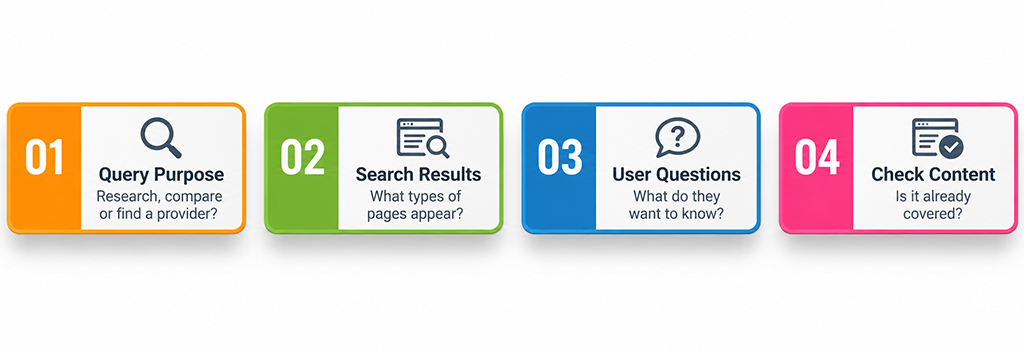
An assessment should consider:
- Whether the query indicates research, comparison or an intention to find a provider.
- What types of pages appear for the search term.
- Which questions potential customers may have at that stage.
- Whether an existing website page already addresses the query.
This helps businesses decide whether to improve an existing page or create a separate resource. It also reduces the risk of publishing multiple pages that compete to address the same search purpose.
Assign a Specific Role to Every Important Page
Each page should have a clear objective. A service page should explain an offering, a case study should demonstrate relevant project experience, and an informational article should answer a particular question. These pages can support one another, but their primary purposes should remain distinct.
A planned on page SEO approach considers the relationship between the search query, the page format and the information presented. For instance, a visitor looking for a service provider should be able to find the relevant service page rather than landing on an article that only discusses the subject generally.
Practical Techniques to Align Website Content with Search Intent
Once the purpose of each page is established, businesses can work on the elements that make it useful to visitors and relevant to search queries. The following techniques address different aspects of page optimisation, from the information provided to the actions visitors can take.
Develop Service Content Around Actual Deliverables
A service page should explain what customers can expect from the business. General promotional statements do not provide enough detail for someone comparing providers or deciding whether an offering meets their requirements.
Businesses should include information such as:
- The services or activities covered.
- The types of projects or requirements the business handles.
- The process involved in delivering the service.
- Relevant qualifications, experience or examples of completed work.
- The steps a potential customer can take to make an inquiry.
For example, a digital marketing company should explain the specific activities included in its services instead of relying on broad claims about online growth. Clear descriptions give visitors practical information to consider before approaching the business.
Improve the Depth and Accuracy of Page Information
Page content should provide the details visitors need without including unrelated explanations. Businesses should ensure descriptions are specific, accurate and useful to the intended audience, as repeated promotional statements can make important information harder to understand.
Website content optimization involves refining existing text, adding missing details and removing irrelevant information. It also includes updating service descriptions when offerings or processes change, ensuring visitors always find accurate and relevant information.
Refine Page Titles and Search Descriptions
Page titles and meta descriptions introduce website content in search results. They help users decide whether a result is relevant to their query, so the wording should accurately represent the destination page.
A structured meta tag analysis helps identify missing, duplicated or unclear page titles and meta descriptions. During this review, businesses should check that:
- Each important page has a distinct title.
- Titles describe the main subject accurately.
- Meta descriptions summarise the actual page content.
- Search snippets do not make promises that the page cannot fulfil.
These elements should reflect the purpose of each page rather than repeat keywords without context. Clear search descriptions help attract visitors whose expectations match the information available on the website.
Using On Page SEO Services to Build Useful Internal Links
Internal links allow visitors to move between relevant sections of a website. They are particularly useful when someone needs additional information before making a decision.
An effective internal linking strategy connects pages that have a genuine subject relationship. For example, a service page may link to a relevant case study that demonstrates the work, while an informational article may direct readers to a service page when they need professional assistance.
Businesses should check that links lead to useful destinations, use descriptive anchor text and make important pages accessible through logical navigation. The purpose is to help visitors explore relevant resources, not to add links wherever a keyword appears.
Improve Page-Level Elements Beyond the Main Text
Page elements help visitors and search engines understand a page’s subject. Headings should clearly describe each section, images should support the topic, and URLs should be relevant and easy to understand.
On page SEO optimization includes reviewing heading hierarchy, image descriptions and page URLs to ensure they support the main content. Relevant image descriptions and informative headings also help visitors understand the information presented.
Match Calls to Action with Visitor Intent
The next step offered on a page should reflect what visitors are ready to do. Someone reading an informational article may prefer to explore a related resource, while a visitor viewing a service page may be ready to request a quotation or arrange a discussion.
Businesses should choose calls to action that suit the purpose of each page. A direct enquiry option may work well on a service page, whereas a link to a detailed guide may be more appropriate within an educational article. This creates a more natural journey instead of presenting visitors with the same sales message everywhere.
Use Supporting Content to Address Customer Concerns
Businesses offering SEO services in Dubai can use supporting content such as project examples, process explanations, service comparisons and FAQs to address potential customers’ questions and help them make informed decisions.
Businesses should decide which details belong on the main service page and which need a separate resource. For example, a comparison page can explain differences between service packages, allowing the main page to remain focused while directing visitors to additional information when needed.
Identify Content Gaps Through Competitor Analysis
Competitor analysis is a useful part of on-page SEO services in Dubai, as it can reveal information that visitors may expect but cannot currently find on a business’s website. Reviewing relevant competitor pages can help identify missing service details, useful explanations or important supporting information.
The purpose is not to reproduce another company’s content. Businesses should assess whether the information is relevant to their own audience and whether they can provide a clearer or more complete explanation. This approach helps identify genuine opportunities for improvement rather than adding sections simply to make a page longer.
Improve Mobile Usability and Page Experience
Visitors should be able to access and use website content comfortably across different devices. A page that is difficult to navigate or read can prevent people from accessing important information, even when the subject is relevant to their search.
These aspects include mobile page layouts, readability, navigation, loading speed and the positioning of essential elements. The usability of forms and enquiry sections must also be considered for small screen sizes. These checks help visitors navigate the website and interact with its content more easily.
Choosing the Right Provider for Your On-Page SEO Requirements
Implementing these improvements involves research, content evaluation and an understanding of the website’s commercial objectives. Businesses considering on page SEO services should assess what a provider will actually do and how the proposed work relates to their requirements.
Review the Scope and Deliverables
The scope of work depends on the website’s size, current condition and business priorities. It is important for companies to know what pages will be analyzed, what changes will be advised and whether implementation is included before choosing the provider.
A proposal may cover:
- Reviewing priority pages and identifying optimisation opportunities.
- Evaluating content against relevant search queries.
- Improving titles, descriptions and heading structure.
- Reviewing internal links and other page-level elements.
- Providing recommendations and explaining implementation priorities.
- Reporting on completed work and relevant performance changes.
A clearly defined scope makes it easier to compare providers based on deliverables rather than general promises about rankings or traffic.
Assess the Provider’s Analysis and Recommendations
A reliable provider should explain the reasons behind its recommendations and show how the proposed work addresses the website’s specific requirements. Recommendations should reflect the website’s actual content, audience and commercial priorities.
During an SEO consultation, businesses can discuss their website’s current challenges, important services and expectations from the optimisation process. This also gives them an opportunity to understand the provider’s proposed approach and ask how the work will be prioritised.
Companies looking for professional seo services should favour clear recommendations supported by website analysis. A provider should be able to distinguish between essential improvements and optional changes instead of suggesting the same activities for every business.
Consider Experience in the Target Market
Businesses should also consider whether a provider understands the market and audience they want to reach. Industry terminology, customer expectations and the way services are presented can differ between markets.
When evaluating an SEO company in Dubai, businesses should examine whether its recommendations account for the intended audience and the company’s commercial objectives. Relevant market understanding can help shape service descriptions, page priorities and the language used across the website.
Businesses evaluating SEO services should examine the proposed scope of work, communication methods and reporting practices. The provider should explain what they will offer and how that relates to the needs of the site.
Conclusion
Matching website content with search intent requires a clear understanding of what visitors expect from each page. By developing useful service information, refining page elements, connecting related resources and choosing appropriate optimization techniques, businesses can make their offerings easier to understand and help potential customers make informed decisions. On page SEO services bring these activities together through structured analysis and practical improvements that support organic search visibility and business enquiries.
SEO UAE helps businesses improve their website visibility through tailored SEO strategies, including on-page optimisation, content improvements and technical recommendations based on their search requirements and business objectives.
Frequently Asked Questions (FAQs):
What do on page SEO services include?
They include improving website content, titles, meta descriptions, headings, internal links and other page-level elements.
Why is search intent important when creating website content?
It helps businesses provide information that matches what visitors expect from their search queries.
How can businesses make their service pages more useful?
By clearly explaining their services, including relevant examples and providing useful next steps.